A year with Lexplore
Regardless of whether you're a school leader, teacher, or other staff member, we can help you implement Lexplore effectively in your school.
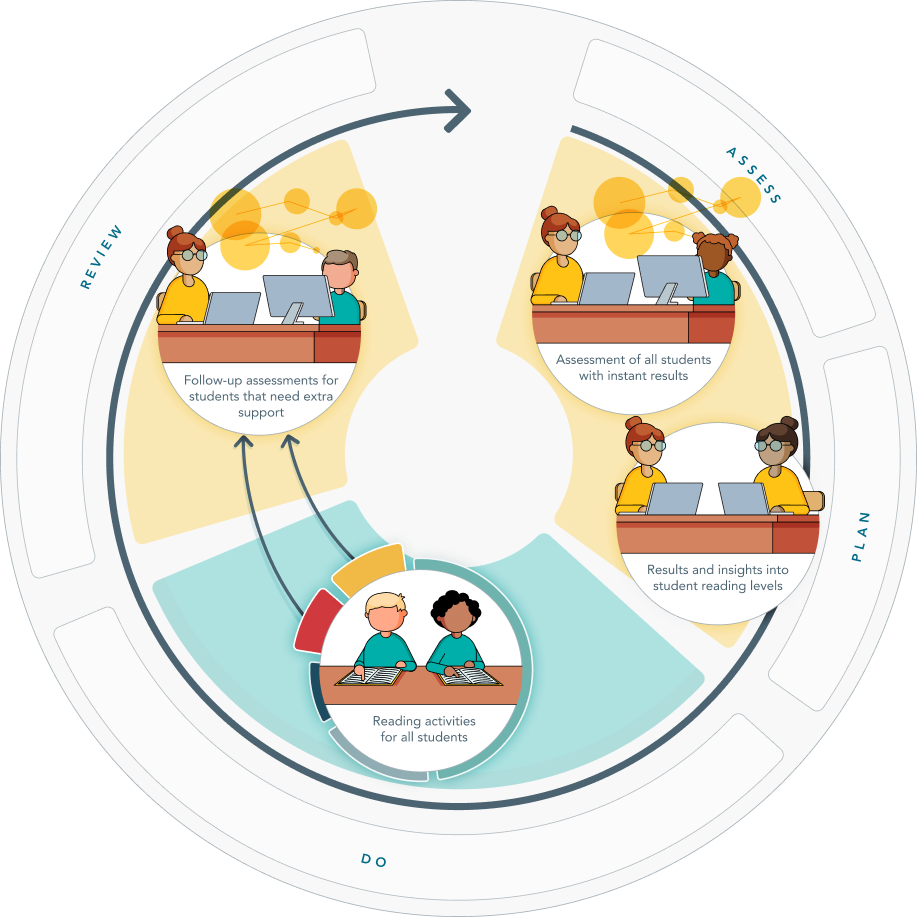
We always begin with four key questions:
Where are we now?
Where are we going?
How do we get there?
What was the outcome, and what do we need to do next?
Assessment – Where are we now?
We recommend that you:
- Create a schedule for all the assessment periods throughout the school year.
- Begin with an initial assessment period across the school to gain a clear overview of the current situation.
- After the initial assessment, plan when you will analyse the data and schedule periods of reading fluency training.
By following our systematic method, you will gain a strong understanding of your learners' reading fluency levels and know what steps to take to support their improvement.
Analyse your results- Where are we going?
The purpose of Lexplore's assessment tool is to provide detailed insights into pupils' reading abilities.
These insights can be gathered at the organisational, school, group, or individual level. The information you collect will give you a deeper understanding of the needs within your school or for individual pupils, helping you determine the next steps.
We recommend that you support one another as staff and conduct the analysis of results together. This increases the likelihood of creating an effective whole-school reading improvement strategy based on the insights you have gained
We would especially recommend that you:
- Use the Lexplore Score to track the student's individual development.
- Listen to the audio recordings.
- Compare previous insights with the latest results to evaluate your reading instruction at the organisational, school, group, and student levels.
Additionally, you can monitor the pupils’ daily reading, both through the e-library and the physical books they log in their reading diary.
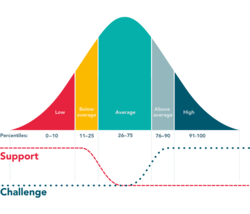
After an assessment, students in Year groups 1 & 2 will automatically be recommended fluency books at their level. Reading these will provide the appropriate level of challenge to help them consolidate and advance their reading fluency. For other year groups, you, as a teacher, can assign the Fluency books yourself if you think it is appropriate for the student.
For younger pupils and, more generally, for older ones, we also recommend Paired Reading in books as an alternative.
Carrying out reading activities - How do we get there?
Now the important work begins – developing reading fluency!
To support the development of reading fluency, Lexplore offers lessons and exercises focused on teaching reading strategies and language comprehension.
As a school team, decide which of our reading training activities will be most beneficial for the learners in your school, based on the insights gained from your screening period.
Consider providing additional intervention for pupils who struggled with the assessment and are showing clear difficulties with their reading abilities. We recommend more intensive training and teaching for these students.
After a few weeks, use a staff meeting to review the strategies being taught in reading lessons. Together, evaluate how you can best utilise Lexplore's lessons and exercises to ensure your teaching significantly contributes to improving reading skills. Be sure to choose strategies that are appropriate for your learners and your school, making adjustments as necessary.
Remember that all lessons and exercises are completely independent of specific texts. All material is based on literature in general, whether digital or physical.
The most important thing is that these lessons and exercises are carried out, and that the teaching of reading is integrated throughout your entire school.
Evaluate and plan – What was the outcome, and what do we need to do next?
At the end of each term, you should follow up and evaluate what has been accomplished, both at the group and individual levels.
Assessment
"Re-assess students with low results, or any others who you believe require a follow-up assessment. For example, there may be students who achieved an average banding level, but you feel they should be reaching a higher banding based on previous analysis or performance.
When re-assessing students, you may find that a student has not developed as expected. Carefully examine their results and analyse the audio recordings
Is there anything you can identify?
What is their area of weakness?
What do they need to do to move forward?
Do they need more intensive intervention?
If you have many students with high banding results, you could consider creating an intervention group with shared reading activities that challenge them and push them further.
Reading instructions
Evaluate the Reading fluency training in each class and share experiences within the team.
What worked well?
What could be improved?
Adapt activities for the next term, focusing on targeting the specific needs of individuals and groups.
Remember, the most important thing is consistency and maintaining the cycle of assess, plan, do, review.
The more you assess and analyse, the deeper your insights will be into the students' reading abilities and how to move them forward. The same applies to teaching: the more frequently you carry out reading fluency training or lessons/exercises in class, the more fluent the students will become.
As a result, their reading ability will improve, as will be reflected in subsequent assessments