Step 3: Independent reading of a fictional text
When students are mature, you can start letting them read more on their own so that they increasingly take responsibility for their own learning.
Divide the students into pairs or groups of 4–5, where they will alternately act as teachers and students for each other.
You have previously modeled the approach on the same type of literary text,t and you have also read a similar text together and discussed the content of the text using the comprehension strategies as a starting point.
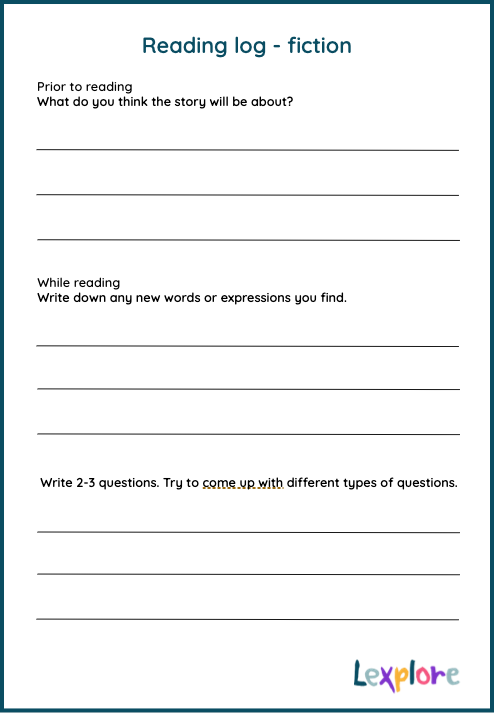
You can write it up as a reading log /workflow on the board to support students' reading and strategy use.
Now, it is the students' turn to complete the exercise.
Before reading:
Activate your prior knowledge by looking at the front of the book together.
What do you see in the picture?
What is the title of the text?
Predict what you think the text will be about.
What type of text is this?
Why does the author want us to read the text?
During the reading:
Let the students take turns reading parts of the text, or let them read-listen to the text together and encourage them to stop reading after a couple of pages.
Let the students work together to figure out the words that are new to them.
Encourage them to ask each other a question about the text and let their peers answer.
As a help, it may be good to use the question words:
Who?
Which one/which ones?
Why?
How?
When?
What?
Once students have become confident in asking questions about a text, it is a good idea to encourage them to ask different types of questions.
To think together about the type of question and how the answer can be found.
Encourage students to tell each other if they have received any different sensory impressions by reading the text.
Also, let students use the following questions when they have read a section of a book and are to predict the plot in the next chapter.
What is the next chapter called?
Does the chapter title give any clues about what the chapter will be about?
What do you think will happen in the next chapter?
After reading:
Encourage students to discuss the content of the text and have them summarize the book together.
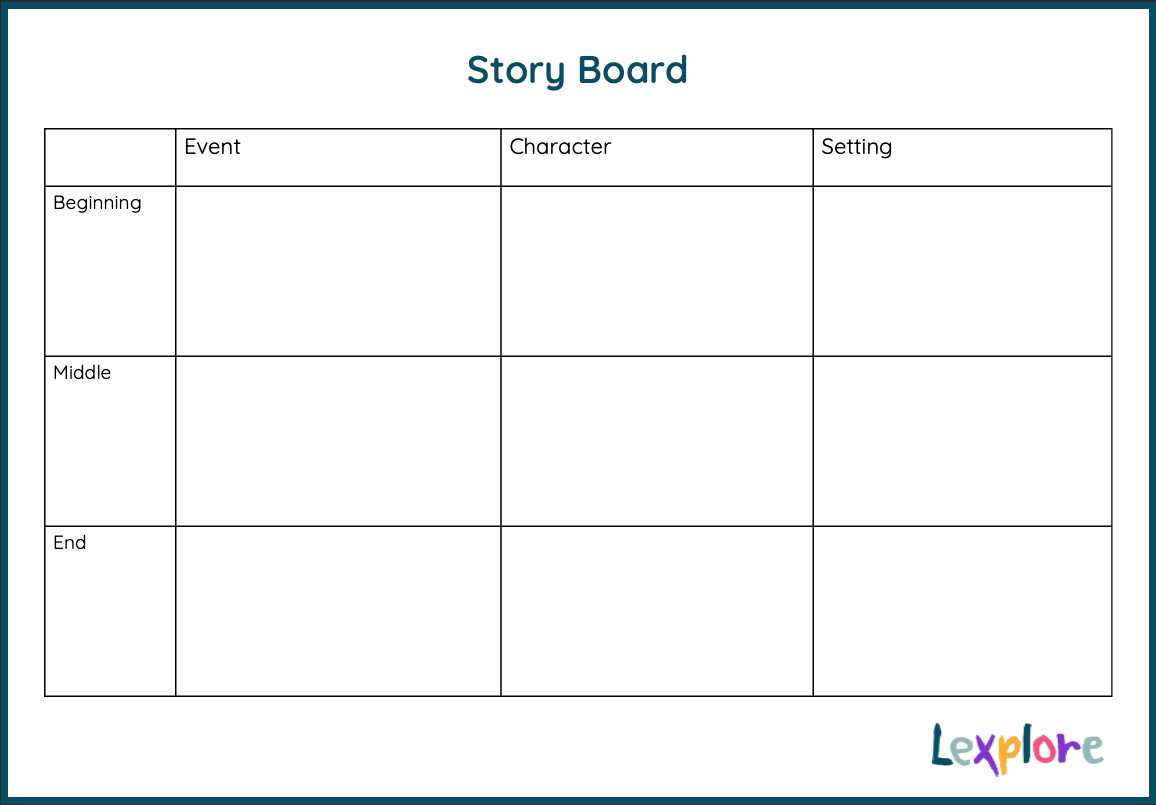
Let the students use the reading log or narrative chart to help them fill in the plot of the text using different headings.
Once the students have completed the Story outline, they can use it to write their summary of the book.
Evaluate together how the different comprehension strategies were used.
What is the next chapter called?
Was there anything difficult?
What can we think about for next time?