Text conversations - non-fiction texts
The purpose of the exercise is to help students formulate questions at different levels – on the lines, between the lines and beyond the lines. This exercise helps students understand the difference between these types of questions, as well as how they can actively work on understanding and reflecting on factual texts.
Implementation
Read the text together
Write or display the following text on the board or a screen:
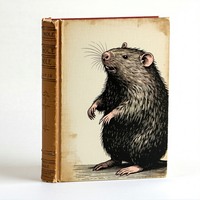
"The mole eats snails and other small animals. Worms are the best thing it knows. The mole has strong teeth. With them, the mole can pull out worms stuck in the soil. Every day, a mole eats as much as half its weight."
Read the text aloud to students and ask them to listen carefully to the information presented.
Question on the lines
Ask the first question:
What does the mole eat?
Students should be able to easily answer this question by referring directly to the text, for example, "The mole eats snails and worms." This is a question that has its answer on the lines in the text. Explain that this type of question is a line question, where the answer is found directly in the text.
Question between the lines ( inferences )
Ask the next question:
Why do moles have such strong teeth?
Students may conclude that moles have strong teeth because they need to pull out worms stuck in the soil. This requires Students to make an inference – they draw a conclusion based on the information they have and their background knowledge (for example, that it is difficult to get worms out of the soil). Explain that this type of question is about reading between the lines – interpreting or drawing conclusions that are not directly stated in the text but that can be assumed based on the information provided.
Ask beyond the lines (connection to own experiences)
Ask a reflective question:
How many kilograms of food do you think you would need to eat in a day to eat as much as a mole?
You can give the students the opportunity to reflect and think about their own experiences to answer. Since we know that a mole eats half its body weight every day, Students need to think about their weight and what that would mean for them. This question goes beyond the lines – it is about connecting the text to their own experiences and making a personal reflection. There are no right or wrong answers here, but the answer must be connected to the information they have received in the text.
Summary and reflection
After completing these three levels of questions—on the lines, between the lines, and beyond the lines- bring students together to discuss what they have learned.
Ask them to think about how they asked their questions about the text and whether they were able to use the different levels of questioning. Discuss what was easy or difficult about understanding these different levels of questions and answers.
Suggestions!
Use pictures to reinforce understanding of the text. For example, you could draw a mole and show where it eats and how it uses its teeth.
Make the difference between the questions clearer by using gestures. For example, for questions on the lines, point to the text; for questions between the lines, point to your head (think about it), and for questions beyond the lines, point to your heart (connect to your own experiences).
For younger students or those who need extra support, write the questions on the board and use simpler language to explain the difference between the three question levels.
After the Lesson, students can start using this structure themselves. When working with other factual texts, you can allow them to ask questions at the three levels, which strengthens both their reading comprehension and analytical skills.