Introductory Lesson on reading - What do we do when we read?
This exercise will get your students to reflect on what is required to read and understand a text. By working with different text types and languages, they gain a concrete understanding of how language works and how different elements affect Reading comprehension.
Preparations
Choose texts to read for them and prepare a sentence with reversed word order to illustrate how word order affects comprehension.
Consider creating an inviting and engaging atmosphere during reading, where the students are allowed to think critically and actively about linguistic comprehension.
Implementation
Before reading – What is needed to read?
Begin the lesson by asking the students: What do you need to know to be able to read? Allow them to reflect and share their thoughts. You can expect them to say that it's important to know the letters and the sounds they make.
Confirm their thoughts and explain that letters and sounds are basic but that there is more to reading than that
Reading texts without understanding – Read with empathy
Read one of the two texts with great empathy and show the text to the students as you read:
Hämä-hämähäkki keep langalle . Tuli said rankka , hämähäkin The sun is shining brightly . satehen . Hämä-hämähäkki keep again . ( A song in Finnish)
All mine Duck swimming auf dem See . Köpfchen in das Water , little tail in the Hooray . (German nursery rhyme)
When you are finished, ask the question: What do you think, do you understand the text? Give Students time to reflect and respond.
Then, ask your students what else is needed to understand a text. Most likely, someone will say that they need to understand the words to understand the text. Confirm this.
What is needed to understand the text – The importance of understanding the words
Read an English sentence aloud: I have four brothers and two sisters who all live at home.
Look puzzled and tell them that you don't understand what the text means, even though you recognize all the words.
Ask the students why they don't understand the text, even though you understand all the words. Here, one of the students should suggest that the words should be in a specific word order to be understood. Discuss the importance of word order for understanding the text.
Work with students to correct the sentence: I have four brothers and two sisters who all live at home.
Reflection and discussion
Ask students how to learn word order. Discuss that word order is an important part of grammar and that it is different for different languages.
If there are students who speak other languages, ask them to reflect on how word order works in their native language. This can contribute to an understanding of how language works and how it can affect reading comprehension.
Conclusion – Different Reading Strategies
Tell the students that a good reader uses different strategies to understand texts.
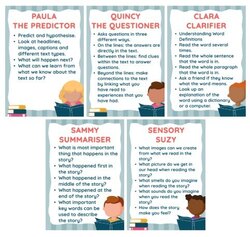
Predictions: Thinking about what the text will be about before you start reading.
Clarifying: Understanding words and expressions, and if necessary, looking up words or asking someone for the meaning.
Asking questions: Ask questions about the text to better understand and make inferences (conclusions) based on what has been read.
See internal images: Use your imagination to create a picture of the text in your mind.